
What You Missed In Public Affairs AI This Summer
While you were out of the office this summer, Washington sorted AI into two categories and put a regulatory hold on only one of them. Nobody voted on this. No bill, no rulemaking, no comment period. It happened through a takedown letter, an unpublished framework, and a chip company's checkbook. In today's short read, we review the summer's big AI moves and why open versus closed is the dividing line heading into the fall.
The Model Washington Switched Off
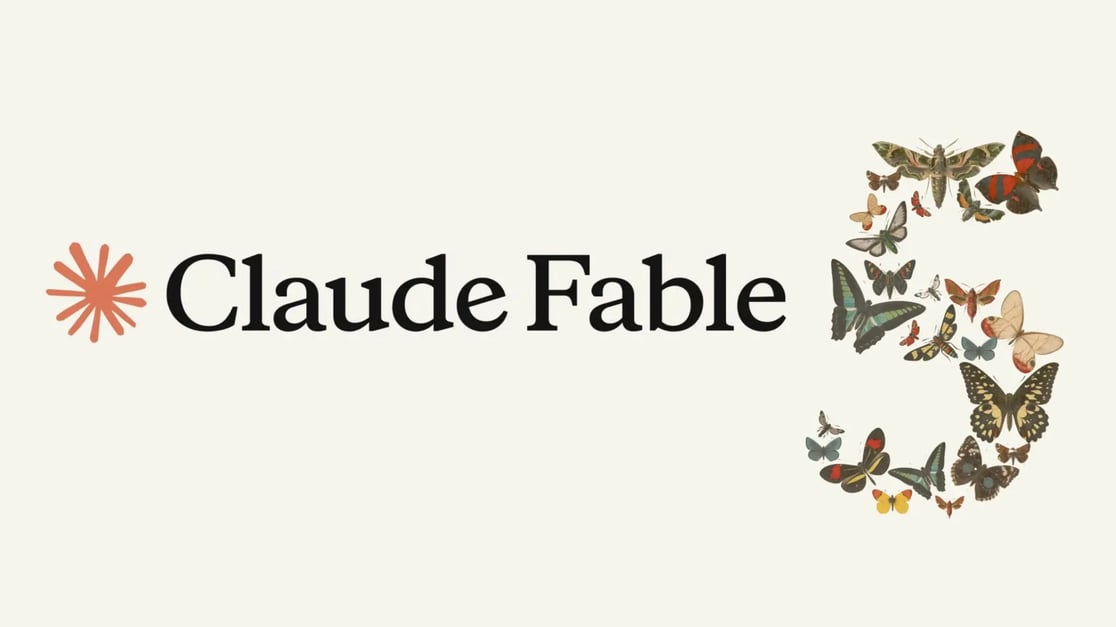
On June 9, Anthropic released Claude Fable 5, its most capable public model. Three days later, the Commerce Department ordered the company to cut off access for any foreign national anywhere in the world. Anthropic could not verify nationality in real time, so it took the model down for everyone. The Administration's stated rationale was a reported jailbreak with national security implications; Anthropic disputed this. Commerce lifted the order June 30 and the model returned July 1.
But that one action established a new regulatory regime for AI.
The Default Regime Nobody Passed
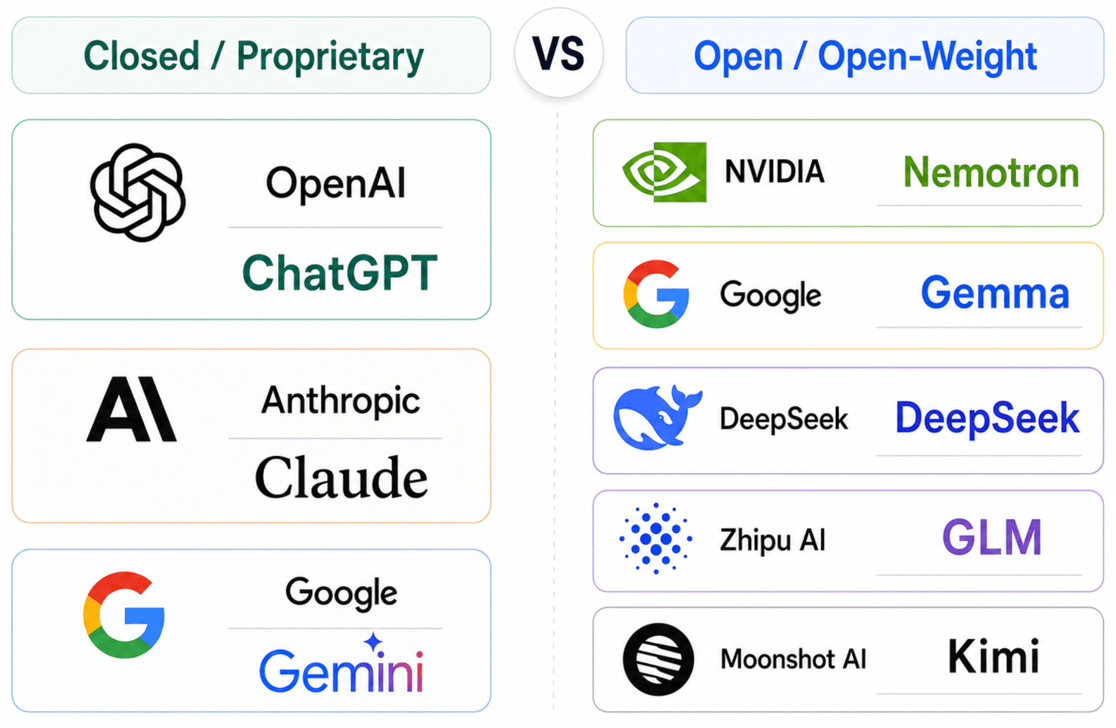
The regulatory kill switch only exists for closed models. A closed model lives on a company's servers (like Anthropic's, OpenAI's, or Google's). It has an owner, an address, a general counsel, and an off button. An open-weight model, one whose parameters anyone can download and run on their own hardware, has none of that. Once the file is loose, there is no server to seize and no switch to flip.
So the rules flow downhill to the models the government can reach. On August 4, the White House briefed roughly a dozen AI companies on a "voluntary" framework asking developers of closed frontier models to hand over up to 30 days of pre-release access for cybersecurity review. Open-weight models are excluded, and the Administration does not plan to publish the regulatory framework at all.
Then NVIDIA Put Money On The Other Side
Late July: NVIDIA CEO Jensen Huang posts on X for the first time, to defend open models. August 11: NVIDIA ships Nemotron 3.5 Lightning, an open-weight model small enough to run on a single GPU in a laptop. August 20: NVIDIA is reportedly in talks to take a stake in Mercor, the expert-data supplier behind recent Nemotron training, at a $20 billion valuation.
Then this weekend. NVIDIA is reportedly paying roughly $6 billion to license the technology of coding startup Poolside and absorb more than 100 of its engineers into the Nemotron program, plus a reported $1 billion equity investment. The stated goal: one of the most powerful open-weight models in the world, built to compete with the Chinese labs that currently lead this category.
That captures the whole fight in one transaction. The most valuable company on earth just spent billions to build a frontier model in the one category of AI that the federal government can't regulate.
What This Means For Public Affairs
Here is the dividing line going into the fall, and it runs straight through your own shop. One group of organizations will keep running every workflow on closed frontier models. The other will deploy a mix of open and closed models. That second group is not making a philosophical bet on AI openness. It is buying performance, margin, and a regulatory hedge in one decision. The first group is making a bet too. They just might not realize they are doing so.
Two Ways To Operationalize This Email
🔱 Ask every vendor one question this week. "Which model powers this, and what is your fallback if it goes offline?" This summer proved the answer matters.
🔱 Find one workflow to move off a closed model. Pick something high-volume and low-stakes, summarizing comment files or first-pass list building, and price it against an open-weight model. That test will show you what a hedge would actually cost.