

If You Think You're "Geo-Targeting" on Meta, Think Again
A canard that dies hard in digital advocacy is consultants continuing to claim they can "geo-target" on social media. In today's short read, we show you why it's time to put this bird to rest.
Meta Limits Geo-Targeting To A 15 Mile Radius
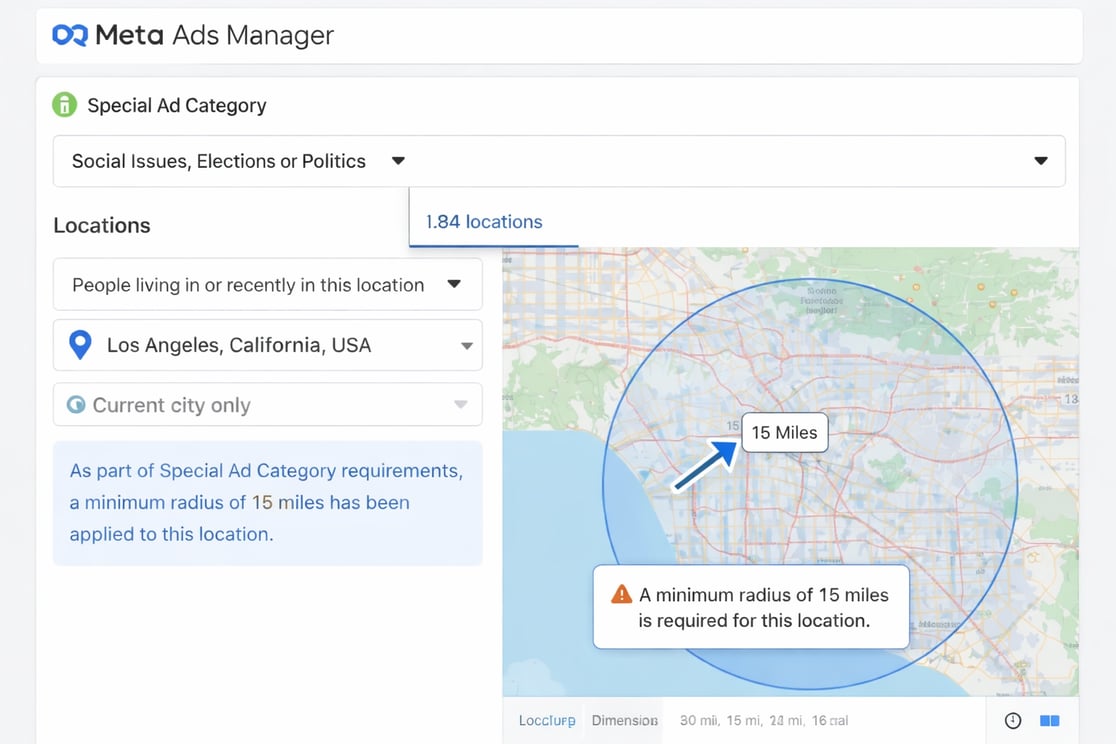
For any digital advocacy ad, the closest Meta allows you to geo-target is a 15 mile radius. Interestingly, Meta doesn't advertise this restriction, but log into your Meta ads manager account and you'll see something like this for any issue or candidate ad:
In public affairs campaigns, the point of geo-targeting is to reach a VERY small audience, often a single key decision-maker. Here's what a 15 mile radius means in practice:
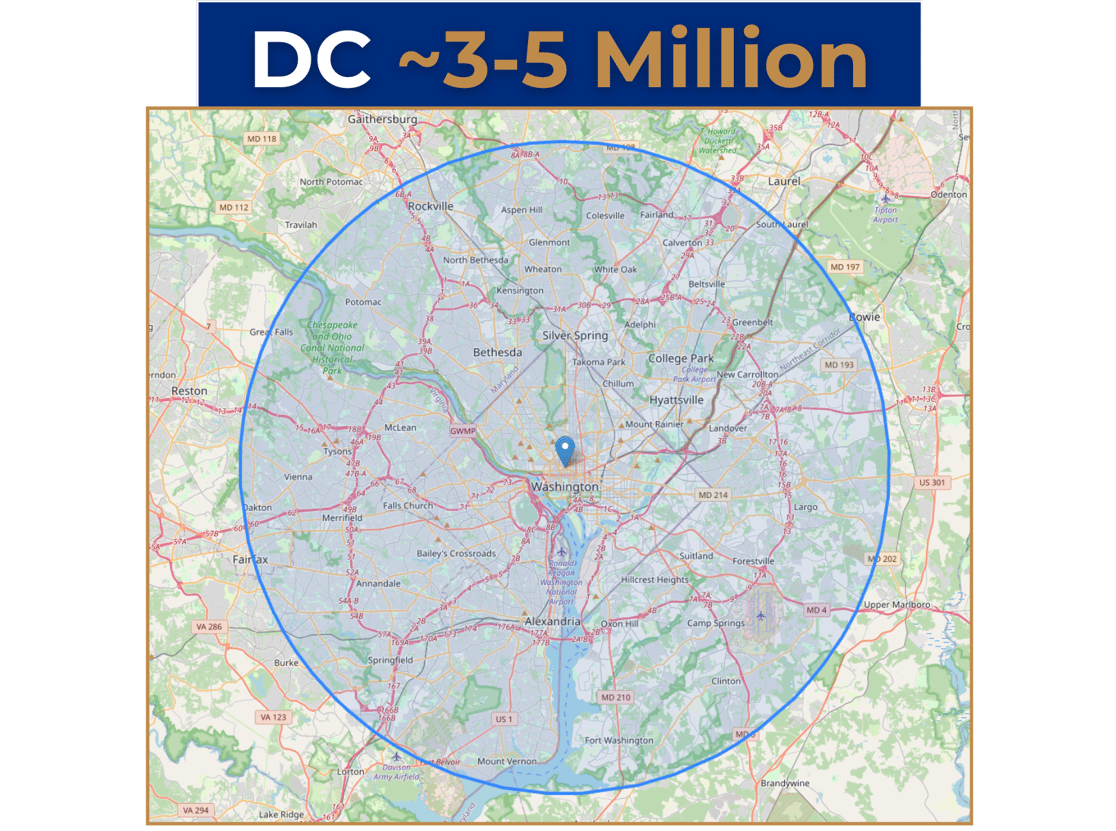
In D.C., 15 miles runs well outside of The Beltway, capturing anywhere from 3-5 million people.
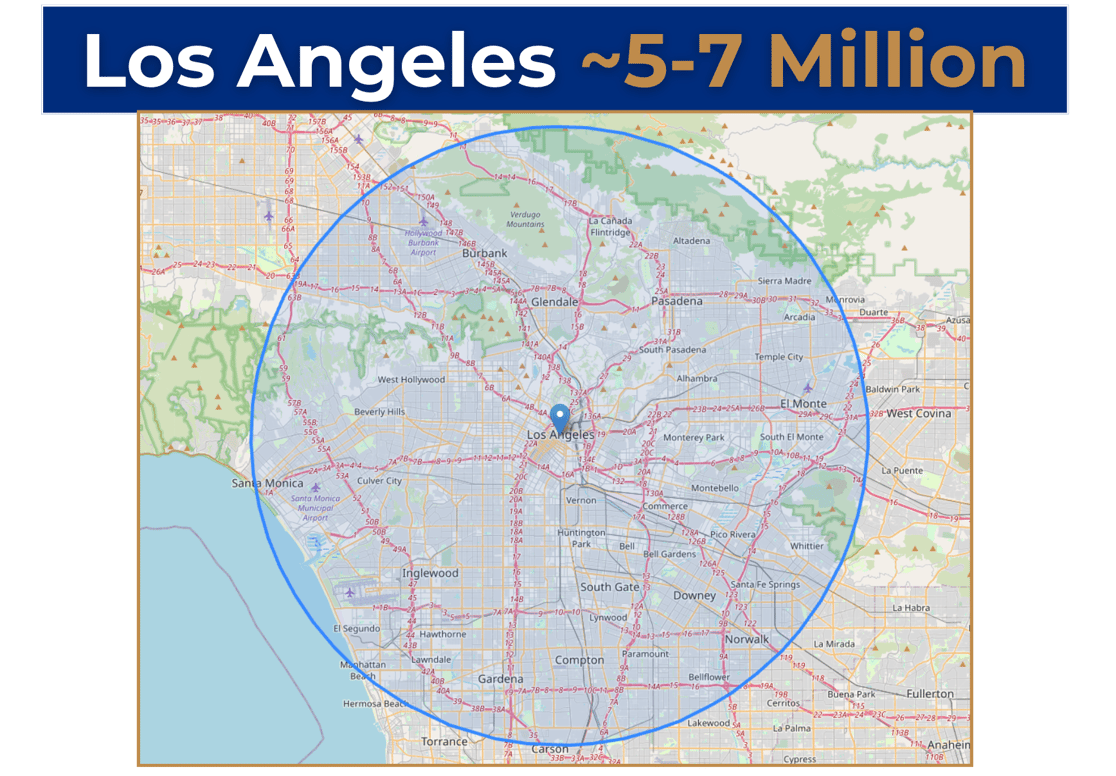
In L.A., you'll be forced to waste budget on 5-7 million people, touching 18-22 Congressional Districts depending on where you center the radius.
That's Not Geo-Targeting, It's Just Wasting Money
Say you're trying to reach 16 people in a public affairs campaign (one decision maker and their core group of influencers). If you pay for an ad to 5 million people, assuming a typical campaign budget, here is the exact percentage chance you have of reaching each of those people even a single time:
0.000000000000000000000000000000016%
Or put more simply:
ZERO
That's not geo-targeting, or even targeting at all. It's at most just checking a box that you're "on social media."
Our advice if you're intent on being on social media despite this? Do an organic post. Hit the boost button and spend $50. Check your box, and move on to strategies that actually deliver.
One Way To Operationalize This Email
🔱 The next time a consultant tells you they can deliver your ads on social media, insist on seeing exactly how. Demand the proof in the reporting that your ads are actually hitting the target.