
The End of One-Size-Fits-All Messaging
A landmark new study put AI head-to-head against human debaters and produced a finding every public affairs professional needs to see. In today's short read, we break down what it means—and why it will transform the way you advocate.
The Historic Bottleneck of Too Much Information
No human being has ever been able to synthesize the full universe of information that exists about a single elected official. Not the most senior lobbyist in town. Not the chief of staff who's worked alongside the Member for fifteen years. Not the political reporter who's covered the district since the candidate's first race. The volume is simply too large for any one person to hold in their head—every vote, every floor speech, every committee transcript, every social post, every interview, every donor, every district demographic shift, every staffer's background, every interest group meeting on the calendar.
Until now, this was an accepted limitation of public affairs. You did your best with what one researcher could pull together for one meeting, and the rest of the universe of relevant information went untouched.
A new study tells us exactly how much that limitation was costing us.
900 Debates. Six Data Points. One Striking Finding
Researchers at EPFL, Princeton, and Fondazione Bruno Kessler, publishing in Nature Human Behaviour, ran 600 head-to-head debates between GPT-4 and human debaters—900 participants total, random topics, ten minutes of structured back-and-forth.
The variable: sometimes the AI was given exactly six basic demographic facts about its opponent—age, gender, ethnicity, education level, employment status, political affiliation. That's it. Six fields you'd find in any basic voter targeting plan.
The result: when the AI had those six data points, the odds that the human moved toward the AI's position rose 81.2% over the plain human-vs-human baseline.
Six data points. An 81% lift in persuasive impact.
Now Apply That to an Elected Official
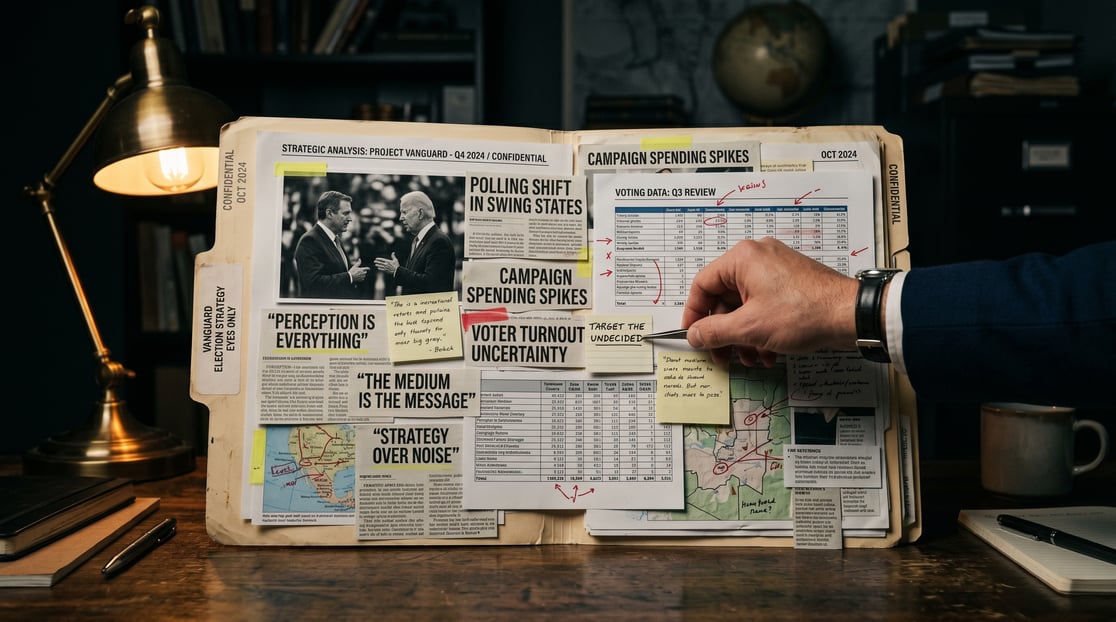
Stop and do the math. Six demographic data points produced an 81% lift. The information that exists about a single Member of Congress isn't six data points. It's thousands. Every roll-call vote across multiple terms. Every floor speech. Every committee statement. Every press release. Every public schedule. Every district economic indicator. Every key staffer's resume. Every social post. Every press hit going back years.
If six demographic fields can produce an 81% lift, what happens when AI ingests and reasons across thousands of relevant data points about the specific human you're trying to move?
The honest answer: we don't know yet. But the floor of that answer is "vastly more than 81%."
That's adaptive persuasion—a message built on a depth of research no individual could ever produce on their own, tailored to the specific human you're trying to move.

What This Means for Public Affairs
Human researchers are no longer the answer to creating messages. Every pitch can now be tailored in a way that even the largest Potemkin army of interns could never do.
The campaigns that scale adaptive persuasion will be the winning campaigns. Generic messaging is one of the new casualties of the AI Age.
One Way to Operationalize This Email
🔱 Build adaptive persuasion into your workflows. If you're relying on generic messaging, you're falling behind.